Saturday, 24 September 2016

Documentary.

Documentary.

Definition of documentary:
1) Using pictures or interviews with people involved in real events to provide a factual report on a           particular subject.
2) A film or television or radio programme that provides a factual report on a particular subject.
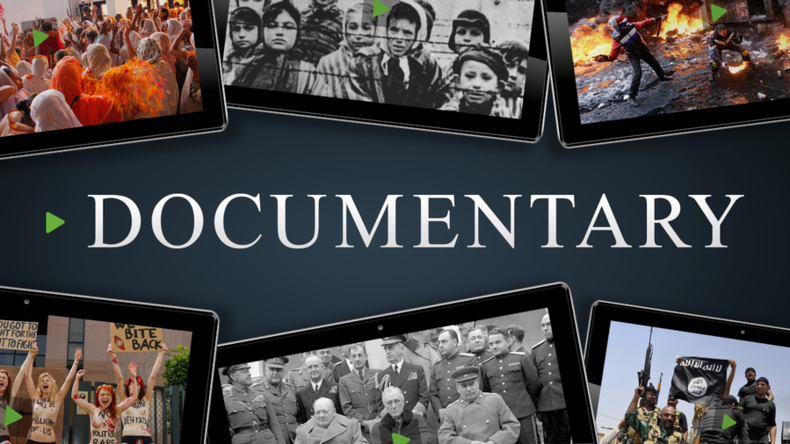
A documentary is a term to describe a non-fiction film that in some way captures or documents parts of reality. A film documentary is based on the real world and real people using images (sometimes real images and sometimes dramatised) to depict the story of what happened in that event. Allot of documentaries use interviews as a way of telling the story or the use the 'fly on the wall' style (where they observe whats going on). However, documentaries aren't just about recording the interviews or the event, they also need to be edited and certain recordings need to be chosen carefully in order for the documentary not to reel off facts but to get the audience to think around what they are being presented with. Documentaries are used to inform people about a certain event or topic but also allow people to see the news from a different perspective(s). They look at interesting or unusual events from an unknown angle or from a point of view. You could argue that documentaries take the facts and present them in a more dramatic way in order to entice or interest the audience. Documentaries can be as experimental and expressive as any other films and still show a different way of seeing things.

There are six different styles of documentaries. These are:
Expository- It is what most people associate with being a documentary and it is used to either inform of persuade the audience.
Poetic- It focuses on showing the audience a world through a different set of eyes. It aims to provoke feeling rather than state facts.
Observation- It simply observes the world around them (fly on the wall). It gives the audience an insight to an important event from an insider point of view.
Participatory- Includes elements of expository and observation documentation where the audience can hear the film maker asking questions and influencing what is happening in that scene.
Reflexive- Similar to participatory, the film maker is often in the film, however the documentary focuses on them making the film and themselves.
Performative- Creates an emotional response for the audience. Rather than us gaining knowledge from the text, it makes us understand it.

The best documentaries of the decade (2010-2014)
The Act of Killing (2012)
Exit Through the Gift Shop (2010)
Senna (2010)
These documentaries cover completely different stories which shows that documentaries aren't held back and cover a range of real life stories and situations. There are also sub-genres within the documentary genre including: Sport, crime, political and biographical (e.c.t). Documentaries allow the film maker to cover a topic or situation that they think is important or is under represented and show it in a way that will reach their target audience and inform them about the story.


Undefeated.

Undefeated.

Key Cast: Bill Courtney, O.C. Brown, Montrail 'Money' Brown.
Director: Daniel Lindsay, T.J. Martin.
Genre: Sport Documentary
Themes: Friendship, Teamwork, Poverty
Release: August 2012
Gross: $562,281


Key scenes:
A key scene within this documentary is when 'Money' is not allowed to play football for Manassas. This is significant as he is a main person in this documentary who the audience is rooting for. Because the audience is positioned to see the documentary from the perspective of the Manassas football team, we ultimately want them to achieve and win, so by one of the key players being not allowed to play football makes the audience feel sympathy towards him. The audience fee as if they are one of the players in the football team so when something goes wrong they feel how it feels for the Manassas football team. 
Another key scene in the film is when the Coach goes to the house of Chavis in order to try and get him to come back to the football team. This is significant because it helps show how invested Coach Bill is ad how much he wants to help these kids who need football. This reveals part of his personality and makes the audience connect with him more. Because the audience sees such a positive relationship between the coach and the team shows them that he isn't a normal coach and that he will do anything for them.

Key Micro-features:
An important micro-feature in the documentary is Mise-en-scene. Through out the documentary the audience sees where the team of Manassas live and what it is like to live there. The young boys come from a violent and poor area which is significant because it helps show why the boys are so desperate to play football. They need football in order to get themselves a better life and go to college. The mise-en-scene is also important because again it helps explain why Coach Bill has volunteered for six years as it shows that he wants to make sure that the young boys get what they deserve rather than what they have been given.

Comparable:
A similar film to this documentary is 23 Blast (2014). This film is also based on a true story of a blind footballer who's coach will do anything to get him back playing on the field. The films have similar themes but also have a similar character, the coach. The coaches in the films both want to change the reputations of the team they are coaching. In Undefeated the coach wants to show Manassas to be serious competitors rather than a football team who never win. In Blast 23, the coach wants to prove that even though Travis is blind it cant hold him back. In both films they have the same idea that people should never give up on what they want.

Friday, 23 September 2016

THE IMPOSTER!!

The Imposter!!

Key Cast: Frederic Bourdin, Carey Gibson, Beverly Dollarhide, Nicholas Barclay.
Director: Bart Layton
Genre: Biography Documentary
Themes: Family, Deceit, Mental Health, Secrecy 
Release: August 2012
Box office: $1,999,277.

Key Scene:
A key scene in his film is shown at the beginning when we see the imposter trying to get into the children's home. In the scenes where he is talking about trying to get into a foster home he says 'it's all he wants'. He is a 23 year old man trying to pass himself off as a young teenager and trying to find a children's centre to live in. This is an important scene because it helps show why the imposter was doing what he was doing. The audience can understand that he wants t be a child again and get a second chance, so the audience is aware of why he goes to so much effort to try and prove himself to be a child. From this the audience also gets the idea that he had a bad child hood and can assume that he wasn't loved or was abused. This doesn't make the audience fully sympathise with the imposter but just makes it easier to understand whey he put himself in the position that he is in. The fact that he is a 23 year old man trying to be a child also suggests some mental health issues which makes the documentary more tense as we are not quite sure as to what he could do next because so far everything we know about him is a lie.
Another key scene within the film is the big reveal towards the end of the film where the audience's perception of Nicholas Barclay's family changes. In this scene, we see the imposter explain why he thinks his plan to take on the identity of Nicholas worked. What is so important about this scene is that from the beginning of the film the audience sympathises with the family and questions the imposter. Towards the end of the film the audience is left astonished and questioning what could have happened. The reveal makes the film gripping for the audience as it goes against what the audience already knows and makes the story seem even more shocking.

Key Micro-features:
Two key micro-features in this film are cinematography and editing. These two are important because they were used as a way of showing the audiences the emotions of the real life characters in the film. Throughout the documentary it kept cutting back to the face of the imposter whilst the family was talking about Nicholas and what the imposter did. This is important because it made the film have a more twisted edge to it. The audience saw close ups of his face when he had a mischievous smile on his face (cinematography(zoomed in on face to clearly show the different emotions that the imposter felt telling his story)) then quickly cutting back to the story. This could insinuate that the director was trying to show how easy it was for Frederic to get in to the family's life and how he was always scheming and planning his next move. The two micro-features worked together to help show the imposter to seem unstable but also scary as in the majority of the film no one really knew who he was. The quick transitions and close ups help put the audience on edge and pull them into the story as they wanted to see why he went through all that trouble to do something so unthinkable.

Comparable:
A similar film to this is 'The Pretty One' (2014). It is about twin sisters that get in to a car accident where one of them dies. The similarities between this film and The Imposter is that they both have characters that take on someone else's identity, however one of them is more twisted than the other. In the film "The Pretty One' the twins are mixed up and the one who is alive is believed to be her sister. Instead of telling any one she lives her sisters life. Both films have themes of deceit and secrecy and use their new identities to create the perfect life they have always wanted.

Sunday, 18 September 2016

Z for Zachariah.

Z for Zachariah.


Key Cast: Margot Robbie, Chris Pine, Chiwetle Ejiofor
Director: Craig Zobel
Writer: Nissar Modi
Genre: Thriller Drama
Themes: Love, Survival, Betrayal
Release: August 2015
Box office: $118,483


Key Scene:
A key scene in the film Z for Zachariah is at the end of the film when the audience is waiting for John (Chiwetle Ejiofor)to make a massive decision. This is important as the audience isn't actually shown what happens. The focus of this part of the film is on Ann, sitting in her house by her self. The scene uses Ann's actions/emotions to fore shadow or to represent the actions of John. This is a significant part in the film as the audience is left hanging to see if the relationship between John and Ann comes to an end. Because the film emphasises on the importance between the three characters in the film, the audience does not want to see the relationships break because they need each other and they are the only hope. Most post apocalyptic style films enforce the idea that people need to stay together, so when the audience is left hanging, the audience feel the emotions of Ann who is left in the dark and things could ultimately go back to the lonely life she had before. The scene creates high tension for the audience and makes them really connect with the characters.

Key Micro-features:
An important micro-feature in this film is definitely performance. Due to there only being three characters in the film and being set in a rural run down area the performance is key to keep the audience engaged in the film. The director makes a clear point of defining the characters personalities (for example showing Ann to be kind and warm hearted and John to be intelligent and masculine) in order for the audience to understand the characters and why they make the decisions they do. The main focus of the film is the love triangle between Ann, John and Caleb. The love triangle needs to be believable so that when the equilibrium is disrupted their is a clear reason for it. If the strong connection between the characters relationship isn't clearly shown then the story line isn't as effective.
Mise-en-scene is also important because the film is set post-apocalyptic, the main location needs to reflect that, which it does. The location looks run down and abandoned which enforces the idea that Ann has been alone for quite some time, so when John arrives it is almost a miracle to her. The mise-en-scene (location) although run down is still shown to be a beautiful place as everything they know has been destroyed so, although it helps show a disaster and a catastrophe it still brings hope to the characters.

Comparables:
A similar film to Z for Zachariah is Maggie (Arnold Schwarzenegger and Abigail Breslin 2015). The film is set after a zombie breakout and focuses on the life of a father and daughter. The film is similar to Z for Zachariah because it follows the same idea that because the catastrophe has taken away the people the characters love, it makes the people they are with so much more important. Again, this explains why the people act the way they do and explain why they are willing to do the stuff they did. The Bonds between the characters in both Z for Zachariah and Maggie are very similar and are both emphasised through out the film.

Winter's Bone

Winter's Bone.

Key Cast: Jennifer Lawrence, John Hawkes, Garret Dillahunt
Director: Debra Granik
Writer: Debra Granik
Genre: Drama
Themes: Family, Friends, Betrayal, Poverty
Release: July 2010
Budget: $2,000,000


Key Scenes:
An important scene in Winters Bone is when Ree's brother want to ask the neighbours for food. She replies "never ask for what oughta be offered". This scene is important as it show the audience that Ree is a tough character and that although she is 17 she doesn't show any signs of weakness. This is important to the story line as it explains why she ignores the advice of her friends and family in order to protect the ones she love. This scene shows part of her personality and her characteristics.  It also shows that she is not one to show emotion as she doesn't like to ask for help, again showing no signs of weakness, as she comes across as independent. 

Micro-features:
Mise-en-scene is important in this film as it is used to show the background/personality of Ree. Mise-en-scene is used to show where she lives and how little she owns. The house is shown to be dirty and small, but when she finds out she could lose it, she does everything she can to change that. The audience feel sympathetic towards Ree as the house is important to her.  Even though she is a young teenager bringing up her younger siblings she will go to great lengths to keep her family together. She is brought up in a poor community where people try and do anything to help one another. The film makes an effort to show how little people own to back up the story line that Ree expects people to help her out but instead they try and deter her.
Cinematography is also important as throughout the film there are several scenes where it shows long/mid shots of Ree walking through the wooded area. This is important as it shows to the audience that she is determined to find out what happened to her dad. She will not be put off by any obstacle. It also shows the lengths at which she will go to for her family which again shows that she is a family oriented character and someone who will do anything for them.

Jennifer Lawrence who plays Ree in he film was nominated for an Oscar for this film in 2011 but lost to Natalie Portman for the film Black Swan 2010. Jennifer Lawrence later went on to win her first Oscar for the film Silver Lining's Playbook in 2013. She was nominated for her first academy award at the age of 20.At the time, Jennifer Lawrence was the second youngest best actress Oscar Nominee after Keisha Castle-Hughes.
The film Winters Bone was nominated for over 120 awards including 4 Oscars and has also won over 60 awards.